

Search Results for author: Michael Greger, M.D.

Treating PMS with Saffron

By Michael Greger, M.D. | on March 22, 2013
Posted in: Blog, Charge Nurse's Favorites, Health and Fitness, Nutrition Facts

Saffron pms

Premenstrual Syndrome is among the most common health problems reported by women, affecting approximately 1 in 3, and there’s not much modern medicine has to offer. Ancient traditional medicine, though, in Asia and Persia used a spice called saffron to treat menstrual disorders. But what did they know–that was 3,500 years ago (in fact the earliest recorded use of any medicinal plant). Didn’t they realize you can’t really know anything unless it’s put through a double-blind, randomized, placebo controlled trial? Well it took 3,500 years, but now we finally have it. Watch my 2-min. video Saffron for the Treatment of PMS to see the results.

The spice saffron is composed of the female reproductive organs of the flower of the saffron crocus. Each flower just produces a few threads, such that you need 50,000 flowers to make a single pound of spice–enough flowers to fill a football field. No wonder it’s the most expensive spice in the world. Thankfully, the PMS study found benefits using a tiny amount. What if you could get away with using even less, though?

In my 2-min. follow-up video Wake Up and Smell the Saffron I profile one of the wildest studies I saw published last year that documents psychological benefits from even just the scent of saffron. How’s that for the power of plants? The study concludes:  “Smelling saffron… is simple and easy, and it seems there is little side effect.”

For more flower power see my blog and videos on hibiscus tea (Better Than Green Tea) and chamomile tea (Red Tea, Honeybush, & Chamomile and Chamomile Tea May Not Be Safe During Pregnancy). Read more…

Amla (Indian Gooseberry) vs. Diabetes

By Michael Greger, M.D. | on September 4, 2012
Posted in: Nutrition Facts

For a dollar a month, Indian gooseberry (amla) powder may work as well as a leading diabetes drug without the side effects. Have a question about this video? Leave it in the comment section at http://nutritionfacts.org/videos/amla-versus-diabetes/ and I’ll try to answer it!  Also, please check out my associated blog post on amla and cholesterol. Read more…

How Fiber Lowers Cholesterol

By Michael Greger, M.D. | on August 17, 2012
Posted in: Nutrition Facts

This mechanism is similar to how “normal” levels of fiber consumption (huge by modern standards) Relieve the Body of Excess Estrogen (http://nutritionfacts.org/video/relieving-yourself-of-excess-estrogen/), which may explain reduced breast cancer risk in those eating plant-based diets. Fiber also helps Improve Intestinal Transit Time (http://nutritionfacts.org/video/food-mass-transit/). Stool Size Matters (http://nutritionfacts.org/video/stool-size-matters/) and it Protects Against Diverticulosis (http://nutritionfacts.org/video/diverticulosis-nuts/)!

Have a question for Dr. Greger about this video? Leave it in the comment section at http://nutritionfacts.org/video/how-fiber-lowers-cholesterol/ and he’ll try to answer it! Read more…

Nation’s Diet in Crisis

By Michael Greger, M.D. | on August 11, 2012
Posted in: Charge Nurse's Favorites, Nutrition Facts

Survey reveals the vast majority of Americans are not eating healthy even by U.S. dietary guideline standards.
 

What Are We Eating?

  Read more…

Kale and the Immune System

By Michael Greger, M.D. | on August 4, 2012
Posted in: Charge Nurse's Favorites, Nutrition Facts

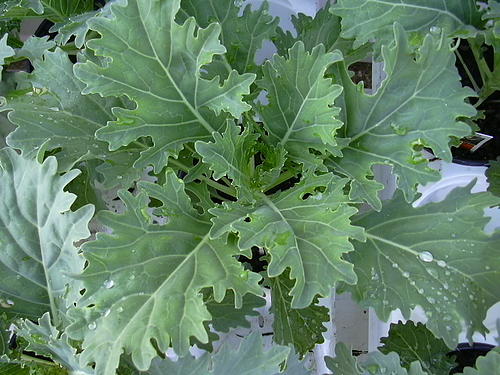
The bioavailability of some phytonutrients is increased by cooking. See my Best Cooking Method video to find out which vegetables are better cooked and which are the best to eat raw. Check out my 33 other videos on greens and hundreds of other videos on more than a thousand subjects. And note that the study I’m talking about here is published in an open access journal, so you can click on it above in the Sources Cited section and read it full-text for free.

Please also check out my associated blog post: http://nutritionfacts.org/blog/2012/04/19/breast-cancer-stem-cells-vs-broccoli/! Read more…

Mercury Testing Recommended Before Pregnancy

By Michael Greger, M.D. | on July 27, 2012
Posted in: Charge Nurse's Favorites, Nutrition Facts

Recent testing of mercury concentrations in three national brands of canned tuna found that:

“55% of all tuna examined was above the U.S. Environmental Protection Agency’s safety level for human consumption.”

And the problem appears to be getting worse. Previous studies on canned tuna, in 1993 and 2004, showed concerning levels of mercury contamination, but not as bad as it is now. See my profile of the paper in my 2-min. video Which brand of tuna has the most mercury?

Given the average level of mercury pollution found in canned tuna, researchers suggest that your average 9 year old would exceed the EPA limit even if they only ate a can of tuna every 6 weeks! They conclude: “These results indicate that stricter regulation of the canned tuna industry is necessary to ensure the safety of sensitive populations such as pregnant women, infants, and children.”

Some question whether the federal safety limits are even sufficiently protective. A recent review from researchers at Harvard and elsewhere on the adverse effects of mercury in fish proposed that the exposure limits set in the United States should be cut in half. Already, current regulations in the United States allow up to 10 times as much mercury in fish as the EPA limit allows, and so our fish is allowed to have 20 times more mercury than may be considered safe.

Because the EPA safety limit on mercury in fish may not sufficiently protect pregnant women in the United States, a recommendation has been put forth that fish-eating women may want to get tested for mercury before considering getting pregnant. Read more…

Doctors’ Nutritional Ignorance | Nutrition Facts | Michael Greger, M.D.

By Michael Greger, M.D. | on July 7, 2012
Posted in: Nutrition Facts

Medical education continues to underemphasize clinical nutrition.

Read more…

Just the Flax, Ma’am | Nutrition Facts | Michael Greger, M.D.

By Michael Greger, M.D. | on June 30, 2012
Posted in: Nutrition Facts

Ground flax seed consumption may decrease breast cancer risk by slowing one’s menstrual cycle. It may also control prostate enlargement as effectively as the leading prescription drug.


Read more…

Treating COPD With Diet | Nutrition Facts | Michael Greger, M.D.

By Michael Greger, M.D. | on June 22, 2012
Posted in: Blog, Nutrition Facts

The three top killers in the United States are no longer heart disease, cancer, and stroke. Stroke just moved down to number four. Number three is now COPD, chronic obstructive pulmonary disease, meaning respiratory disorders such as emphysema. We know we can prevent and even help treat the other top killers with diet (see, for example, Heart Disease: There Is a Cure and my 4-min. video Cancer Reversal Through Diet?), but what about COPD?

Though most COPD is caused by tobacco, up to a third of COPD sufferers never smoked. The title of an editorial in this month’s issue of the American Journal of Clinical Nutrition describes where some of the remainder of risk is coming from: “More Evidence for the Importance of Nutritional Factors in Chronic Obstructive Pulmonary Disease.”

As I explore in my 2-min. video Preventing COPD with Diet, data dating back 50 years found that high intake of fruits and vegetables was positively associated with lung function in general, but does that mean it could prevent COPD? There’s been a burst of new research over the last ten years to answer just that question.

In 2002 we learned that every extra serving of fruit we add to our daily diet may reduce our risk of getting and then eventually dying from COPD. In 2006 we could add tea drinking to fruits and vegetables for COPD prevention. In 2007 a twin pair of studies emerged, one from Columbia and another from Harvard, implicating cured meats such as bacon, bologna, ham, hot dogs, sausage, and salami as a risk factor for developing COPD. Read more…

E. coli O145 Ban Opposed by Meat Industry | Nutrition Facts | Dr. Michael Greger

By Michael Greger, M.D. | on June 9, 2012
Posted in: Blog

One child is dead and 13 others sickened across six states in an ongoing outbreak of E. coli O145. Another child—a first-grader in Massachusetts—also recently died, but that was from a different strain, E. coli O157. After the Jack-in-the-Box outbreak in 1993, E. coli O157 was declared an adulterant, meaning it became illegal to sell meat testing positive for the deadly pathogen, but it remained perfectly legal to sell meat contaminated with the other “Big Six” toxin-producing E. coli strains: O26, O111, O103, O121, O45 and O145, which collectively are sickening twice as many Americans as O157. For years, food safety and consumer organizations have fought to ban the sale of meat soiled with these other deadly strains over meat industry objections.

In the 1990s, the American Meat Institute opposed the original ban on the sale of raw meat contaminated with E. coli O157 despite the devastating effect this pathogen could have on vulnerable populations, especially children. Here’s how one mother described what E. coli O157:H7 did to her three-year-old daughter Brianna:

“The pain during the first 80 hours was horrific, with intense abdominal cramping every10 to 12 minutes. Her intestines swelled to three times their normal size and she was placed on a ventilator. Emergency surgery became essential and her colon was removed. After further surgery, doctors decided to leave the incision open, from sternum to pubis, to allow Brianna’s swollen organs room to expand and prevent them from ripping her skin. Her heart was so swollen it was like a sponge and bled from every pore. Read more…